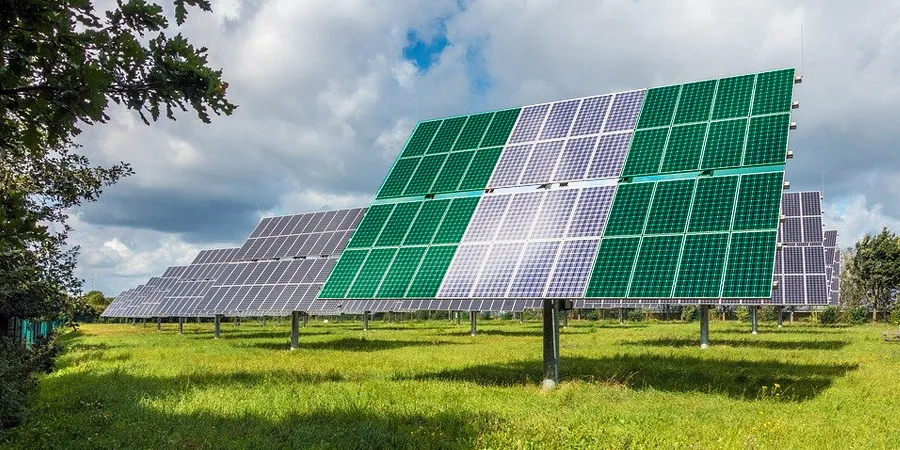
Nigeria, Africa’s largest economy, is accelerating its renewable energy transition with new investment commitments targeting the country’s chronic electricity deficit, which leaves an estimated 92 million people without reliable access to power.
At an Earth Day investment forum in Lagos, the Federal Government announced a $4.5 billion package of public-private partnerships focused on solar mini-grids, wind power, and battery storage systems. The announcement comes as the International Energy Agency (IEA) projects that Nigeria will need more than $25 billion annually to achieve universal energy access by 2030.
“This is not just about energy, but about building the foundation for industrial competitiveness,” said Adebayo Adelabu, Nigeria’s Minister of Power. “Without reliable energy, Africa cannot industrialize. Our priority is to channel investment into distributed, scalable solutions.”
Among the key deals signed was a $1.2 billion financing agreement between Shell’s Renewable Energy arm and Nigeria’s Rural Electrification Agency to deploy 1,000 solar mini-grids across underserved rural areas. The project is expected to impact at least 20 million Nigerians within five years.
Private equity investors are also taking positions. Africa50, a pan-African infrastructure investment platform, announced a $500 million equity stake in a joint venture with Lagos-based startup Daystar Power to expand off-grid solar capacity for SMEs and industrial parks.
Family offices from the Nigerian diaspora have pledged an additional $250 million to support renewable energy entrepreneurs through a new vehicle, the Diaspora Energy Fund, with anchor commitments from investors in the U.S. and U.K.
Analysts highlight the economic upside. According to PwC Nigeria, every $1 invested in distributed renewable energy generates $3 in productivity gains, particularly in agriculture, light manufacturing, and services.
However, challenges persist. Investors remain concerned about currency volatility, policy inconsistency, and risks linked to political instability in northern Nigeria. “There is investor appetite, but there must be clarity,” said Omobola Johnson, Senior Partner at TLcom Capital and former Minister of ICT. “The right regulatory frameworks will unlock billions more.”
Nigeria’s renewable energy push is part of a broader continental trend. Across Africa, off-grid solar capacity has doubled in five years, with Kenya, South Africa, and Ethiopia leading alongside Nigeria. The UN Environment Programme notes that Africa holds 60% of the world’s best solar resources but receives less than 3% of global energy investment.
As COP30 in Brazil approaches, Nigeria hopes its progress will strengthen Africa’s case for scaled-up climate finance. “Nigeria is ready to be the energy transition hub of Africa,” said President Bola Tinubu in a statement. “With the right partnerships, we can light up every home and power every factory.”
For now, the momentum is real, but whether Nigeria can translate commitments into grid-level impact remains the ultimate test.