This Content Is Only For Subscribers
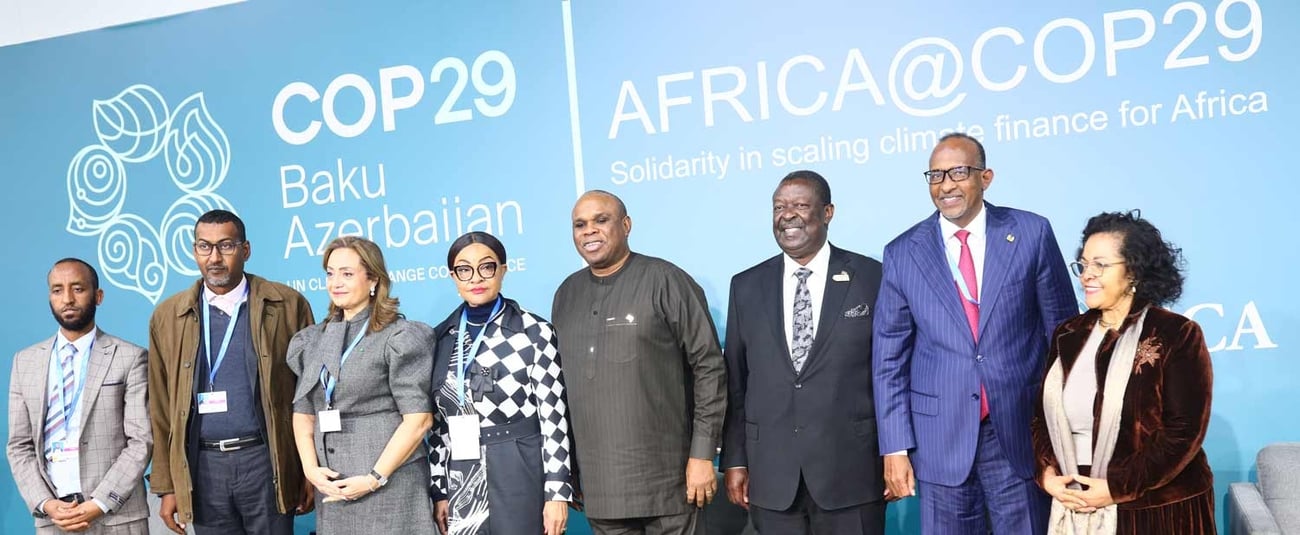
When delegates filed out of Baku’s cavernous COP29 plenary hall, the applause was polite but restrained. For Africa, home to 1.4 billion people and the world’s fastest-growing urban regions, the promises of climate financing once again outweighed the guarantees.
Despite record pledges of over $12 billion targeted at Africa-focused adaptation projects, the continent’s climate finance gap remains staggering — with the African Development Bank (AfDB) estimating that $100 billion annually is required to safeguard food systems, protect coastal cities, and transition energy infrastructure.
“Africa cannot adapt to promises. We need capital that flows as fast as the climate impacts are coming,” AfDB President Akinwumi Adesina told BFA News on the sidelines of the summit.
The “pledge-delivery” problem
Since the Paris Agreement in 2015, wealthy nations have promised billions in annual climate finance, but African negotiators argue that delivery has been sporadic and insufficient. A UNFCCC report released during COP29 revealed that less than 40% of promised funds since 2019 have actually reached African nations in deployable form.
That shortfall has real consequences. In Mozambique, climate-driven floods have displaced over 1 million people since 2019. In Kenya, extended droughts have pushed more than 3 million into food insecurity. Coastal cities from Lagos to Dar es Salaam face billions in potential damages without urgent adaptation.
Yet, despite these risks, private capital inflows to climate adaptation remain weak. Only 2% of global green bond issuances in 2024 were Africa-focused.
New pledges: hope or déjà vu?
At COP29, several major announcements were made:
- The EU committed an additional €3 billion toward Africa’s renewable energy transition.
- The United States pledged $2 billion to support climate-resilient agriculture.
- A new Africa Climate Investment Platform, backed by sovereign wealth funds from the UAE and Singapore, promised $5 billion in blended finance vehicles.
While significant, African negotiators were quick to point out that many of these are conditional, subject to legislative approvals or tied to specific commercial outcomes.
“We have heard this song before. Announcements make headlines, but we measure success in bankable projects, not podium statements,” said Madeleine Diouf Sarr, chair of the African Group of Negotiators.
Investment opportunities hidden in the crisis
The widening gap also highlights untapped opportunities for investors. Analysts note three areas with immediate potential for capital deployment:
- Carbon Markets: With the Africa Carbon Markets Initiative (ACMI) targeting 1.5 billion credits annually by 2030, private investors can position in carbon project development, verification, and trading platforms.
- Green Bonds & Sovereign Debt Swaps: Countries like Kenya and Nigeria are increasingly exploring green bond markets. Debt-for-climate swaps could unlock capital while reducing fiscal pressure.
- Climate-smart Agriculture: Start-ups in precision farming, irrigation technology, and drought-resistant seeds are attracting diaspora investors and family offices looking for both impact and returns.
“We are seeing early-stage African ventures in climate-smart agriculture that could scale globally. The right mix of concessional and commercial capital can make them investable now,” said Samuel Adeyemi, BFA’s senior reporter for business and sustainability, during a post-COP panel.
The politics of climate finance
Beyond numbers, the question of equity dominated COP29. African leaders reiterated their frustration at being asked to meet ambitious net-zero goals without equitable financing. South African President Cyril Ramaphosa told delegates:
“Africa is not asking for favors. We are demanding fairness. The climate crisis was not of our making, but its cost is borne disproportionately by us.”
This sentiment is fueling calls for reform at the IMF and World Bank, where African nations seek concessional terms that reflect climate vulnerability. Without systemic reform, many argue, Africa will continue to receive only trickles of capital compared to its needs.
Looking toward COP30 in Brazil
With COP30 set for Belém, Brazil, African negotiators are already strategizing. They hope to push for binding commitments on climate finance delivery and deeper South-South cooperation, particularly between Africa and Latin America.
The AfDB has announced plans to launch a $25 billion Africa Climate Resilience Fund by mid-2026, leveraging diaspora investment and regional development banks. This fund could become a rallying point at COP30.
BFA News Take
Africa’s climate finance story is more than unmet promises; it is about the investment opportunity of a generation. From carbon markets to resilient infrastructure, the continent is positioned not just as a recipient of aid, but as a frontier for high-return, high-impact investments.
For now, however, the numbers don’t lie: $12 billion pledged versus $100 billion needed. Unless the gap closes, Africa’s development trajectory risks derailment by climate shocks it did little to cause.
As COP29 fades into the rearview mirror, the real test will be whether investors, governments, and multilateral institutions turn pledges into pipelines.